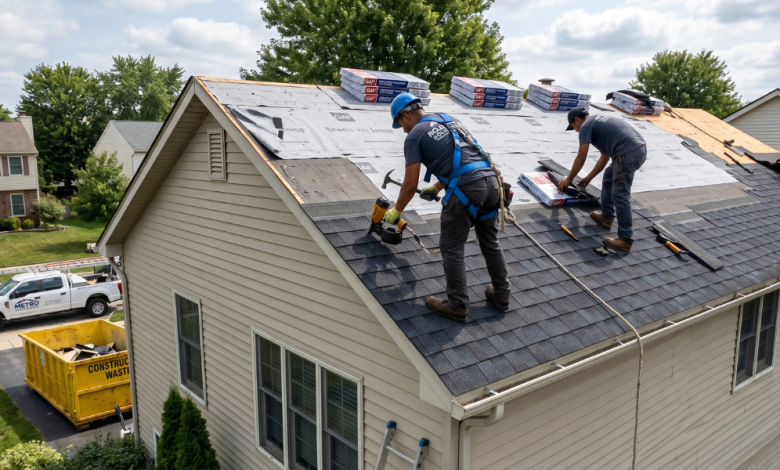
A new roof does more than improve the outside appearance of a home. Properly planned roof replacement can change how the structure handles rain, attic heat, humidity, wind, and everyday temperature shifts. The results depend on the condition of the deck, ventilation, flashing, drainage, and installation beneath the visible shingles.
A Tighter Roofing System Handles Storms More Reliably
Fresh shingles, underlayment, flashing, and starter materials create a more consistent barrier against wind-driven rain. Older roofs often contain brittle tabs, separated seals, exposed fasteners, or patched areas that allow water to slip beneath the surface during severe weather.
Improved fastening also helps the roof resist uplift. Qualified Huntsville roofers follow product-specific nail placement and edge requirements so corners, ridges, and open slopes remain better secured when strong gusts move across the house.
Can Replacement Make Indoor Temperatures More Consistent?
Roofing work can improve comfort when the project corrects heat buildup in the attic. Balanced intake and exhaust ventilation help remove hot air before it remains trapped beneath the deck and warms the rooms below.
Shingle color, material type, insulation condition, and attic airflow all influence the result. Homeowners searching for roofing near me should expect a contractor to explain how these parts work together rather than claiming that shingles alone will lower indoor temperatures.
Better Ventilation Helps Control Attic Moisture
Warm household air can reach the attic through ceiling gaps, exhaust fans, and access openings. Without enough airflow, moisture may collect on cooler decking, rafters, or metal fasteners and create staining that resembles an exterior roof leak.
Correct ventilation reduces the time damp air remains trapped above the living space. A roof company may also identify bathroom fans venting into the attic, blocked soffits, or isolated roof sections that need separate airflow planning.
New Drainage Details Move Water Away More Efficiently
Replacement gives crews access to valleys, roof edges, flashing, and other drainage areas that may have been hidden beneath old materials. Correct overlaps and smooth water paths help runoff reach the gutters without backing up beneath shingles.
Upper-level downspouts and intersecting roof slopes deserve extra attention because they can concentrate water onto small sections below. Experienced Huntsville roof repair professionals evaluate those flow patterns before deciding whether drainage corrections should be included in the larger project.
Sound Decking Gives the Roof a Stronger Foundation
Tear-off exposes the wood deck, allowing damaged panels to be found instead of covered again. Soft spots, swollen seams, old water stains, and loose edges can affect fastening strength and create uneven support beneath new shingles.
Replacing weakened decking restores a flat, stable base for the roofing system. Careful inspection also helps determine whether localized repairs remain sufficient or whether hidden deterioration makes broader roof replacement more practical.
Flashing Improvements Protect the Hardest-Working Joints
Chimneys, skylights, vents, walls, and valleys depend on metal flashing to direct water away from seams. Reusing bent, rusted, or poorly shaped pieces can carry old weaknesses into an otherwise new roof.
Proper reconstruction places flashing in the correct order with shingles, underlayment, and surrounding materials. A dependable roof repair company treats sealant as supporting protection rather than using it to replace sound metalwork and proper overlaps.
A New Roof Can Reduce Unplanned Maintenance
Aging roofs may require repeated service for loose shingles, cracked sealant, worn pipe boots, or recurring leaks. Replacement can reduce those scattered failures by renewing several connected components at the same time.
Maintenance does not disappear completely, however. Gutters still need cleaning, branches should remain trimmed, and periodic inspections can catch storm damage before it spreads. Homeowners looking for roof repair near me may find that targeted work remains the better option when the existing system is still healthy overall.
Material Selection Changes More Than Curb Appeal
Shingles differ in thickness, wind resistance, impact performance, algae protection, and expected service life. Product choice should reflect the roof’s pitch, sun exposure, architectural shape, local weather, and the owner’s long-term plans for the property.
Compatible accessories matter just as much as the main roofing material. Starter strips, ridge caps, underlayment, vents, and flashing should function as one system rather than a collection of unrelated products chosen only by price.
How Does Replacement Affect Future Repair Decisions?
A properly documented installation creates a clear starting point for future maintenance. Photos, material records, warranties, and decking notes help contractors understand what lies beneath the surface if a later storm damages one section.
Targeted repairs may still be appropriate after replacement because a fallen branch or isolated wind event does not automatically require another full project. Fleming Roofing evaluates residential roofs with both repair and replacement in mind, helping homeowners understand how ventilation, drainage, decking, flashing, and material choices can change the way the home performs over time.